Blog Content
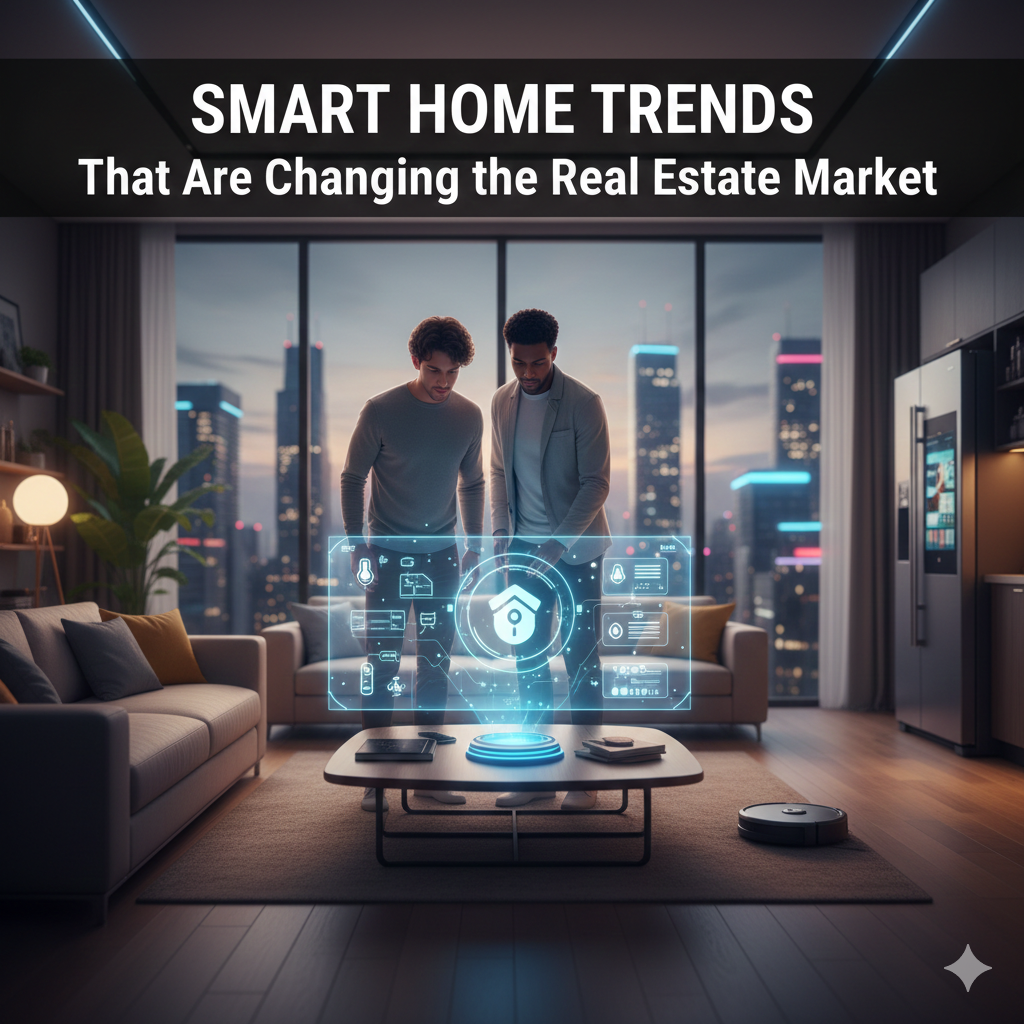
Smart homes are rapidly transforming the real estate industry by redefining how people live, interact with their homes, and manage daily tasks. With the rise of IoT technology and digital lifestyles, modern buyers now expect intelligent features that offer convenience, security, and energy efficiency. As a result, smart-enabled properties are gaining higher market value and faster buyer interest.
1. Smart Lighting and Energy Management Systems
Automated lighting systems allow homeowners to control lights remotely using mobile apps or voice assistants. Motion sensors, scheduling, and energy monitoring help reduce electricity consumption and improve sustainability. Energy-efficient homes are now a major selling point for environmentally conscious buyers.
2. Voice-Controlled Home Automation
Voice assistants such as Alexa, Google Assistant, and Siri have become integral parts of smart homes. Homeowners can control appliances, lighting, music, security systems, and temperature using simple voice commands. This hands-free convenience has significantly increased buyer demand.
3. Advanced Home Security Solutions
Smart security systems including video doorbells, smart locks, facial recognition cameras, and motion sensors provide enhanced safety. Remote monitoring allows homeowners to view live footage and receive instant alerts on their smartphones, offering peace of mind even when they are away.
4. Smart Climate Control and HVAC Automation
Automated thermostats and climate control systems adjust temperature based on occupancy and weather conditions. These systems optimize comfort while minimizing energy usage, resulting in lower utility bills and improved indoor air quality.
5. Solar Integration and Renewable Energy Adoption
Smart homes are increasingly integrating solar panels, battery storage systems, and smart energy meters. These features help homeowners track power consumption, store excess energy, and reduce dependency on traditional electricity sources.
6. IoT-Enabled Home Appliances
From smart refrigerators and washing machines to robotic vacuum cleaners, connected appliances are improving household efficiency. These devices can be monitored and controlled remotely, enhancing daily convenience and productivity.
7. Remote Property Monitoring and Maintenance
Property owners and landlords benefit from smart maintenance alerts, water leakage sensors, and equipment performance tracking. These technologies reduce repair costs and prevent major damages through early detection.
8. Increased Property Value and Rental Demand
Smart-enabled homes often command higher resale prices and premium rental income. Tenants prefer properties that offer modern automation, security, and energy efficiency. This trend is especially strong in urban and tech-driven markets.
9. Integration with Smart Cities Infrastructure
Many real estate developers are aligning smart homes with smart city initiatives. Integrated traffic systems, smart parking, waste management automation, and digital infrastructure enhance the overall living experience and neighborhood appeal.
10. Future of Smart Real Estate
The future of real estate lies in fully connected living spaces powered by artificial intelligence and machine learning. Predictive automation, voice-based personalization, and adaptive energy systems will continue to reshape how properties are designed and sold.
Final Thoughts
Smart home technology is no longer a luxury feature—it has become a key differentiator in today’s real estate market. Developers, investors, and homeowners who adopt smart solutions early can benefit from higher property value, faster sales, and stronger rental demand. As technology evolves, smart homes will remain at the center of modern real estate innovation.